
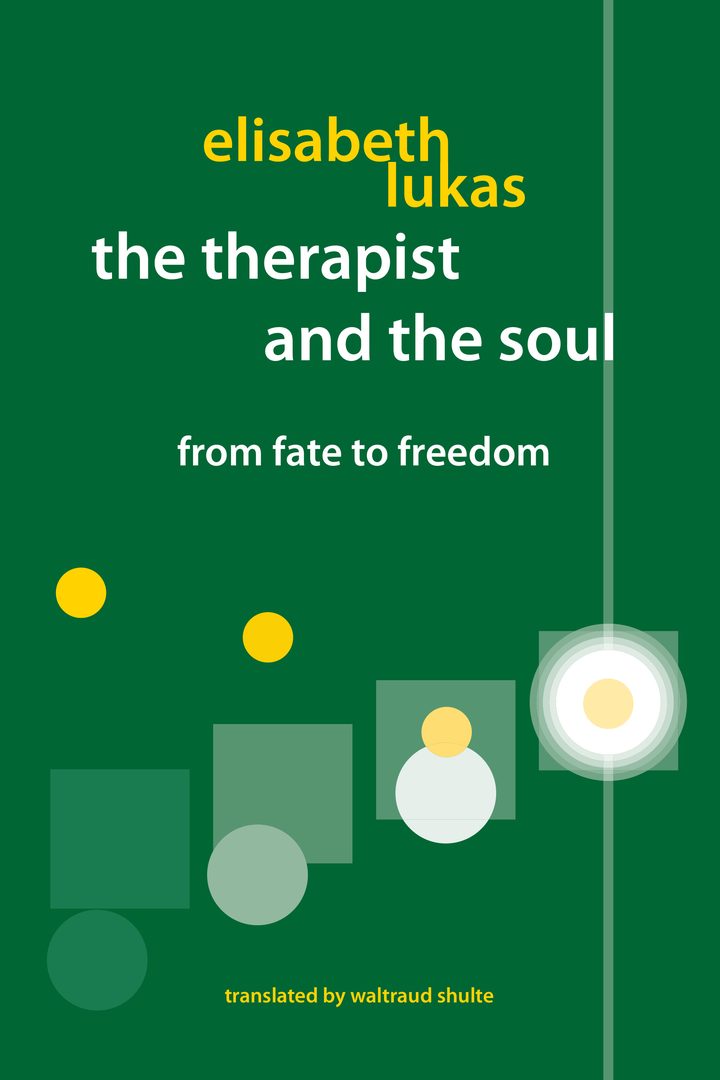
The Therapist and the Soul
From Fate to Freedom
Elisabeth Lukas
Written in 1984 as a counterpart
to Viktor Frankl’s The Doctor and the Soul.
- Translated by Waltraud Schulte
Purpose Research may earn affiliate commissions from qualifying purchases.
About this book
Elisabeth Lukas is one of the leading practitioners of logotherapy in the world, and is internationally known for applying and extending the work of Viktor Frankl. Frankl noted that, “For Lukas, there is no human being who does not retain a chance to grow, no situation which does not have its spark of meaning.… To elucidate meaning possibilities is the art of Elisabeth Lukas and entirely in the tradition of logotherapy.”
In this book, Lukas offers hope to those who suffer from guilt or fear, whether justified or not. Each must be dealt with differently; for example, it is common for a person to suffer from guilt for an accident for which there is no responsibility. Such unjustified guilt is actually the result of the blows of fate, which were not chosen and for which the person was therefore not responsible. On the other hand, where guilt is justified, the offering of “absolution” is not appropriate, and practical measures must be offered for the individual to address it.
Lukas devotes separate chapters to meaningful approaches to the unique struggles facing men and women; working with “problem children”; the use of books for self-therapy; the prevention of suicides; as well as justified vs. unjustified guilt, among others.
Lukas establishes (using examples and case studies) that it is not necessary to dredge up the past, uncover old wounds, or analyze childhood traumas in order to find meaning and healing. What awaits us all is a meaningful choice among a constellation of possibilities.
“Meaning can never be given—it must be discovered.”p. 12
From the book
How can helping support be given in the search for meaning, which every person faces sooner or later? One fact has to be kept in mind: Meaning can never be given—it must be discovered.p. 12
My patients taught me a simple truth: What is positive is in ourselves or it is nowhere.p. 111
Everybody can be good for something or someone, independent of the perhaps miserable position in which the person exists. At the very moment when such a “being good for something” (that is, a meaning element of one’s own existence) lights up, the question “why live?” or “why go on living?” is already answered.p. 186
Fate entails that the circumstances themselves cannot be changed. But we are not responsible for what we cannot change and have not chosen, nor can we be at fault in such circumstances. However, what we have chosen freely, done freely, decided freely to be a part of our own lives, to this we have committed ourselves with all its consequences. It is undeniably our own feat or our own fault.
When we look at it this way, we may hesitate to choose the area of freedom. For freedom may well be a gift, but it is also a sentence to responsibility. And fate may well force us to do something, but it is also a pardon from responsibility.p. 218
For three quarters of a century, psychologists have taken at face value what clients have said about events in their lives, have reconstructed clients’ life histories on the basis of what was said, and consequently have drawn conclusions about their current states. But couldn’t the truth be rather that both the selection of the reported life events as well as the description of how the client is currently doing represent simply and solely the degree to which the person’s attention is focused on the circumstances of fate?pp. 228–229
Human dignity is something that belongs to every person: even the poorest, the sickest, the most “useless” person. Psychotherapy is something that we should be able to apply to the poorest, the sickest, the most “useless” person. If we want to merge the two, we will have to operate within the area of our last possession, which absolutely cannot be taken from us except by death or loss of mind function. And this possession is our spiritual freedom.p. 229
On Elisabeth Lukas
For Lukas, there is no human being who does not retain a chance to grow, no situation which does not have its spark of meaning.… To elucidate meaning possibilities is the art of Elisabeth Lukas and entirely in the tradition of logotherapy.
Viktor E. Frankl, M.D., Ph.D.
Contents
- Preface
A. Toward a Psychology of Human Dignity
- 1Finding Meaning and Psychological Health3
- 2From Depth to Height Psychology19
- 3The Healing Concept in Logotherapy35
B. Being for Something or Someone
- 1Three Fundamental Rules for the Family63
- 2Saying “Yes!” to Problem Children83
- 3The Career Woman: Between Stress and Fulfillment103
- 4The Career Man: Between Success and Dedication119
- 5About Love and Work127
C. Psychological Ministry
- 1Fear as a Challenge to the Human Spirit143
- 2Guilt as an Opportunity for Rethinking163
- 3Thoughts on Suicide Prevention181
- 4About Therapeutic Books193
- 5Human Dignity and Psychotherapy: From Fate to Freedom205
More by Elisabeth Lukas
Meaningful Living
Elisabeth Lukas2020
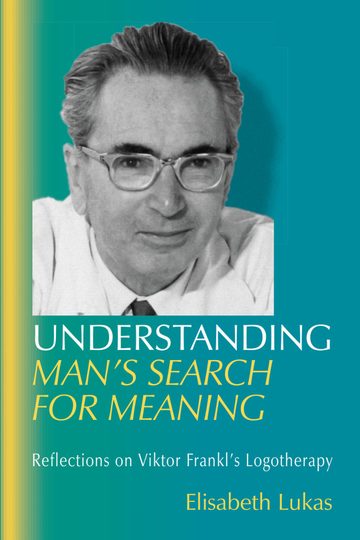
Understanding Man’s Search for Meaning
Elisabeth Lukas2020
Meaning in Suffering
Elisabeth Lukas2014
Stillness and Concentration
Elisabeth Lukas2020
A Unique Approach to Family Counseling
Elisabeth Lukas2020